On this page
Litter box problems are among the most frustrating things a cat owner deals with. Many of them start with a setup that suits the owner more than the cat: one box, in a basement corner, cleaned every few days.
Key figures
- 2 Recommended litter boxes for one cat
- 3 Recommended litter boxes for two cats
- 4 Recommended litter boxes for three cats
The “plus one” rule
The 2021 AAHA/AAFP Feline Life Stage Guidelines give the rule of thumb: one litter box for each cat plus one additional box, or one per social group of cats plus one.
The reason is that even cats that get along prefer to control their own resources. Extra boxes reduce competition and the chance that one cat guards the box from another.
| Cats | Boxes |
|---|---|
| 1 | 2 |
| 2 | 3 |
| 3 | 4 |
- One cat2
- Two cats3
- Three cats4
AAHA/AAFP Feline Life Stage Guidelines, as cited in this article. This table illustrates the per-cat plus-one rule; social groups and placement also matter.
Placement matters as much as number
The same guidelines advise placing boxes in different locations that are easy to reach throughout the house, especially in homes with several cats.
- Not all in one room. Two boxes side by side count as one big box to a cat.
- Away from food and water.
- Quiet, but not trapped. A cat should be able to see around it and leave easily.
- On every floor for older cats or cats with sore joints.
- Away from noisy machines such as washers and furnaces.

Size, litter and cleaning
- Big enough. Many commercial boxes are small. A large storage tub often works better.
- Unscented, clumping litter is a common preference.
- Scoop at least daily and change the litter fully on a regular schedule.
- Avoid sudden changes in litter type or box style.
Cornell’s Feline Health Center notes that medical problems are a common cause of litter box trouble. Rule those out before changing the setup.
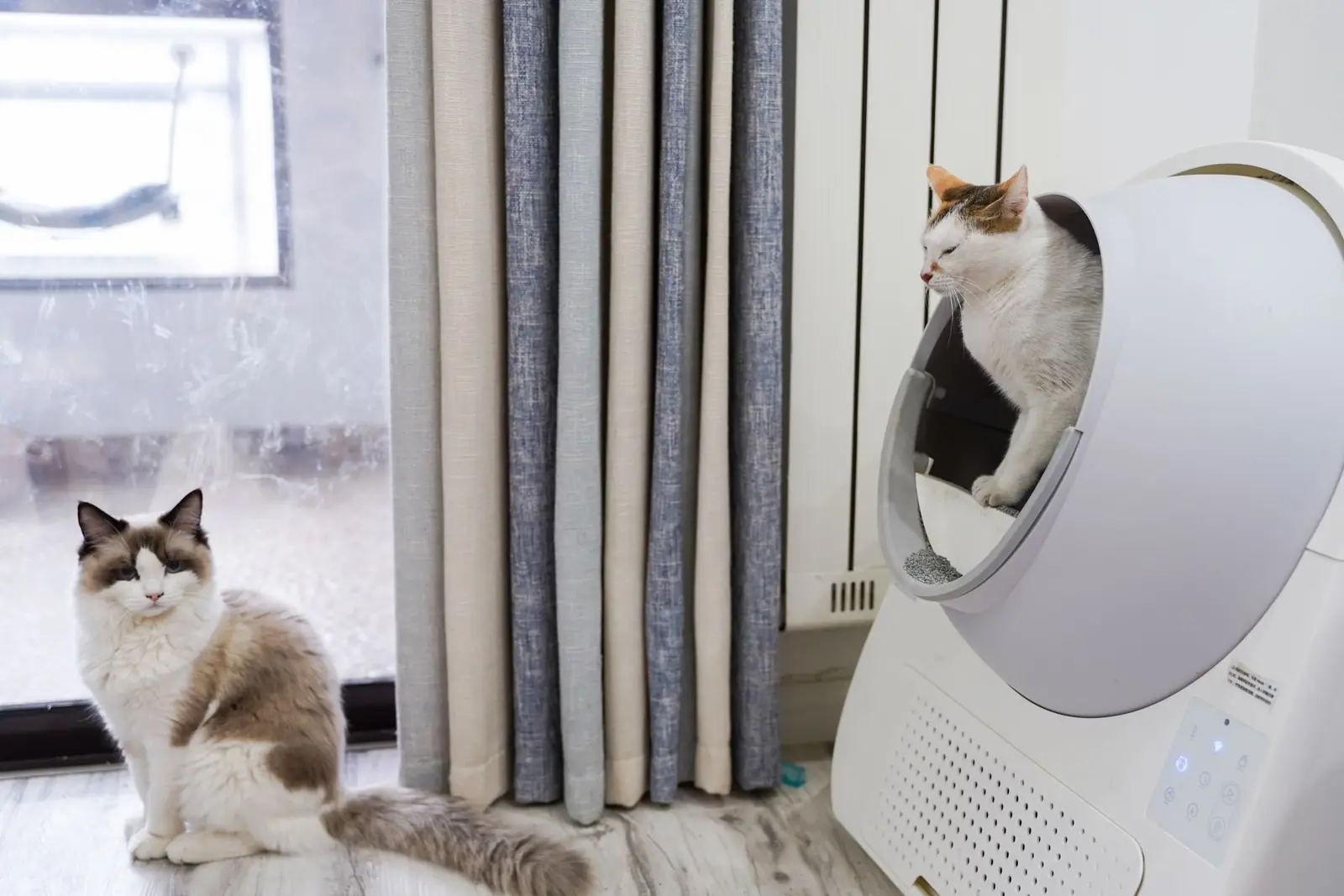
The litter material guide covers supplies separately from placement. The automatic litter box comparison examines whether a machine changes upkeep without removing access requirements.
Questions people ask
How many litter boxes do I need for two cats?
Three, following the one-per-cat-plus-one rule in feline veterinary guidelines.
Can I put two litter boxes next to each other?
Cats tend to treat side-by-side boxes as one. Put them in different locations.
How often should I clean the litter box?
Scoop at least once a day and replace the litter completely on a regular schedule.
Do cats prefer covered litter boxes?
Many do not, because covers trap odor and block escape routes. Offer an open box if you are unsure.
Where these figures come from
- General Litter Box Considerations, 2021 AAHA/AAFP Feline Life Stage Guidelines American Animal Hospital Association · aaha.org
- Feline Behavior Problems: House Soiling Cornell Feline Health Center · vet.cornell.edu
Figures last checked September 2026.