On this page
Buying an incubator makes sense when the goal is to hatch birds and care for the results, not simply to obtain the cheapest laying hens. Fertile eggs can fail to hatch, chicks can need further care, and a hatch does not produce only the sex or breed traits the household hopes for. A machine’s egg capacity is not a promise of future egg production.
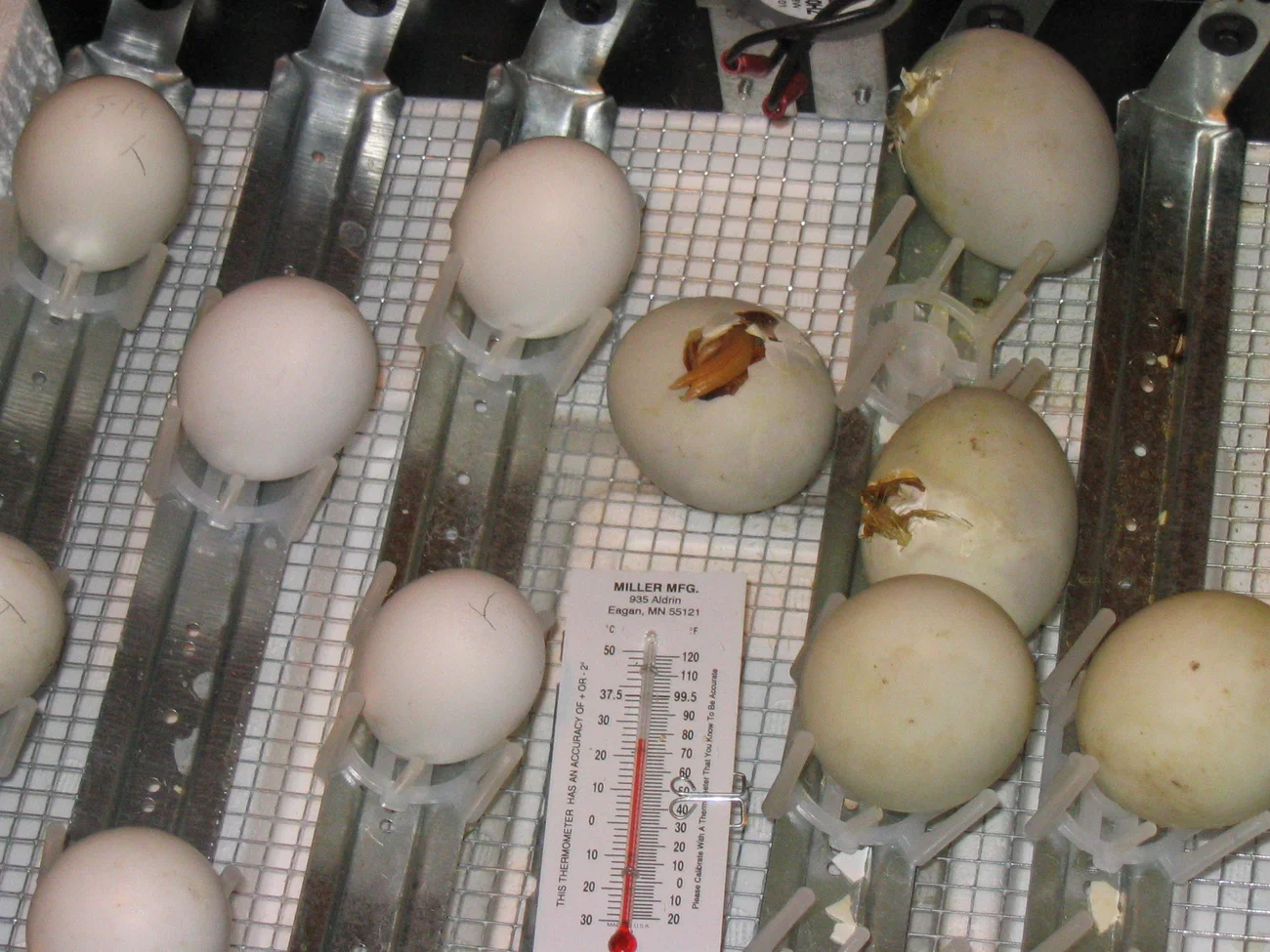
The October 2026 example below uses Brinsea’s published U.S. price and power specifications. The cost scenarios state their assumptions rather than inventing a hatch rate. The cover shows eggs hatching in another incubator; it is an equipment illustration, not the priced Mini II Advance or a recommended temperature reading.
Key figures
- $269.99 Brinsea Mini II Advance sale price
- 7 eggs Brinsea Mini II Advance hen-egg capacity
- $334.20 Example: incubation project before brooding equipment
A seven-egg machine lists $269.99 before added charges
Brinsea’s U.S. page lists the Mini II Advance at $269.99 on sale, against a regular $299.99. The $30 difference is a 10% reduction from the regular price. A sale checked today should not be used as the permanent cost of future orders.
| Manufacturer item or specification | Published figure | Budget meaning |
|---|---|---|
| Mini II Advance incubator | $269.99 sale; $299.99 regular | Machine purchase before added charges |
| Standard hens’ egg capacity | 7 eggs | Eggs set, not chicks guaranteed |
| Typical power consumption | 12 W | Basis for an energy estimate, not a meter reading |
| Maximum power consumption | 20 W | Upper rated draw, not continuous typical use |
| Mini II small-egg insert | $16.99 | Optional accessory for smaller eggs |
| Mini II hatching mats | $7.99 | Consumable accessory listing |
Source note: Brinsea’s current U.S. Mini II Advance product page and specifications, checked October 2026. The accessory prices are separate purchases, and the small-egg insert does not increase the stated hens’ egg capacity.
Dividing $269.99 by seven gives $38.57 per egg position. That is only an equipment-capacity ratio, not a cost per live chick. If fewer eggs are set or some do not develop, the cost per resulting bird changes.
The machine has automatic turning and a digital display, but humidity is managed manually with water trays. Brinsea specifically describes it as unsuitable for automatic humidity control. Do not interpret fully digital as a fully unattended hatching process.
Electricity is smaller than the purchase in this example
Mississippi State Extension identifies the chicken incubation period as about 21 days. At 12 W continuously for that period, the calculation is 12 × 24 × 21 ÷ 1,000, or 6.048 kWh. With an assumed $0.20/kWh, electricity is about $1.21.
At the 20 W maximum continuously, the same calculation gives 10.08 kWh and $2.02. Neither figure includes a brooder or room heating, and neither is a measured result from a hatch. The maker’s typical power is a planning input; ambient conditions and operation can change the draw.
At an assumed $0.40/kWh instead of $0.20, the typical-power hatch calculation becomes $2.42. That is $1.21 more, much smaller than the $269.99 machine purchase. An energy comparison that ignores the brooding stage can nevertheless miss a continuing electricity cost after hatch day.
Price a brooder and its power separately. Incubation and keeping young birds warm are different stages with different equipment. Buying an incubator does not supply housing, feed, waterers or the grow-out space the flock will eventually occupy.
A first-hatch subtotal depends on surviving birds
For a worked scenario, use the $269.99 machine, an assumed $28 for seven fertile eggs, $35 for starter supplies and $1.21 electricity. The subtotal is $334.20. Only the machine and the electricity inputs have published price or specification support; eggs and supplies are hypothetical allowances.
If five chicks survive to the scenario’s counting point, the subtotal is $66.84 per chick. If only three survive, it becomes $111.40 per chick. If the five survivors later include three hens, the same subtotal is $111.40 per hen, before further feed, housing or veterinary costs. These are outcomes to compare, not hatch forecasts.
The denominator needs naming. Eggs set, eggs fertile, eggs hatched, chicks surviving and hens reaching laying age are different counts. Reporting the incubator cost divided by seven as a cost per laying hen skips every stage between setting eggs and an adult flock.
The chicks versus started pullets guide addresses buying birds directly. For a price comparison, request the delivered cost of the same breed and age rather than comparing an unsexed hatch with ready-to-lay hens. A guaranteed-sex purchase and a home hatch carry different uncertainties.
Reusing the machine changes the cost per batch
Assume, for arithmetic only, that the machine supports ten successful projects without replacement. Allocating $269.99 over ten batches gives about $27 of equipment cost per batch. Add the hypothetical $28 eggs, $35 starter supplies and $1.21 energy: the allocated subtotal is about $91.21 per batch.
With five survivors each time, that subtotal is about $18.24 per chick before omitted care costs. It is lower than the first-purchase cash figure because most of the machine’s payment happened earlier. It does not mean the household receives a $27 monthly invoice or that ten usable batches are guaranteed.
A casual one-time project cannot assume the ten-batch figure as its immediate budget. Nor should later projects omit eggs, supplies and care merely because the machine is already paid for. Record which costs are new cash spending and which are an allocation of an earlier purchase.
Brinsea lists a three-year warranty for this model. Read its terms and registration requirements rather than treating that period as a guaranteed number of hatches or a life expectancy. A warranty also does not reimburse every consequence of a power outage or poor egg fertility.
The plan includes brooding and birds that are not wanted for laying
Before acquiring fertile eggs, establish a route for every resulting bird, including males and birds that cannot join the existing flock. Local limits on roosters, flock size and noise can make a hatch impractical even when the machine fits the budget. A promised rehoming arrangement needs checking before eggs are set.
Follow the model’s manual for the species, temperature, humidity, turning and cleaning. Mississippi State’s hatching guidance explains that successful incubation depends on those conditions and ventilation, not just keeping eggs warm. A price guide is not a substitute for the hatching instructions.
Have brooding equipment, feed, water and a plan for every bird ready before setting eggs. Consult poultry-care guidance or an experienced professional for the husbandry arrangement; a machine purchase does not guarantee a safe hatch or future laying hens.
The backyard chicken budget covers the continuing feed and housing lines. If the goal is only a small stable laying flock, obtaining known-age birds may produce a more predictable purchase than hatching. If the goal is breeding or learning, those benefits can justify the project without inventing a cash saving.
A decision can therefore be based on the total cash available for the first project, care capacity and plans for future use. Avoid buying a larger machine solely because its capacity ratio is lower. Empty positions do not reduce the bill, and more chicks require more space and care.
Questions people ask
How much does a small chicken incubator cost?
Brinsea's seven-hen-egg Mini II Advance lists $269.99 on sale against $299.99 regular when checked. Eggs, brooding equipment, supplies and added checkout charges are separate.
Does a seven-egg incubator produce seven hens?
No. Capacity counts eggs set. Fertility, hatching, survival and the sex of resulting birds determine later counts; the examples make those stages explicit.
How much electricity does a 21-day hatch use?
At the maker's typical 12 W continuously, the calculation is 6.048 kWh, or $1.21 at an assumed $0.20/kWh. Maximum rated 20 W for the whole period gives 10.08 kWh; neither includes brooding.
Is the Mini II Advance fully automatic?
It has automatic turning and digital controls, but humidity uses manually managed water trays. Follow its manual and arrange observation rather than treating digital controls as unattended care.
Where these figures come from
- Mini II Advance: U.S. Price, Capacity and Power Brinsea · brinsea.com
- Mini II Advance U.S. User Manual Brinsea · brinsea.com
- Hatching Quality Chicks Mississippi State University Extension · extension.msstate.edu
Figures last checked October 2026.