On this page
An older cat may find a favorite sleeping place, high-sided tray or distant water bowl harder to reach. Home changes can reduce those barriers without buying a new collection of premium pet furniture. The first useful comparison is between bringing a resource closer and buying equipment that helps the cat reach its old location.
The October 2026 prices below identify real products and their fit limits. They do not establish a standard disability budget or a treatment plan. A cat’s reduced jumping or new toileting difficulty can also reflect pain or disease, so the home-access plan and veterinary assessment have different jobs.
Key figures
- $65 Litter-Robot 4 ramp, fits that model only
- $6.99 Petmate small open tray, check entry height
- 11 Senior-cat age threshold in years, per FelineVMA
Moving resources can avoid an equipment purchase
FelineVMA’s senior-care brochure describes cats as senior from age 11. It suggests steps or ramps to favored spaces, low-entry litter boxes and night lights, while also emphasizing that changes in normal behavior can be signs of pain. Age is a reason to review the layout, not proof that every cat needs the same ramp.
Before pricing equipment, map the routes to food, water, litter and resting places. A bed on a reachable lower surface or another water bowl near the sleeping area may remove a difficult trip. Reusing a stable washable bed already owned can create a $0 purchase line, although care and cleaning still take time.
For a litter tray, the veterinary house-soiling brochure recommends a box on the level where an older cat spends most time. Avoid creating a plan that still requires repeated stairs to reach the only toilet. A second tray can cost less than a tall staircase to a litter cabinet and can address a different access barrier.
The senior-cat veterinary visit discussion helps place home observations in the wider care plan. Record difficulty entering a tray, changed jumping and resting locations. A photograph of a cat sleeping comfortably does not establish that its mobility or health is normal.
A $65 robot ramp requires a matching robot
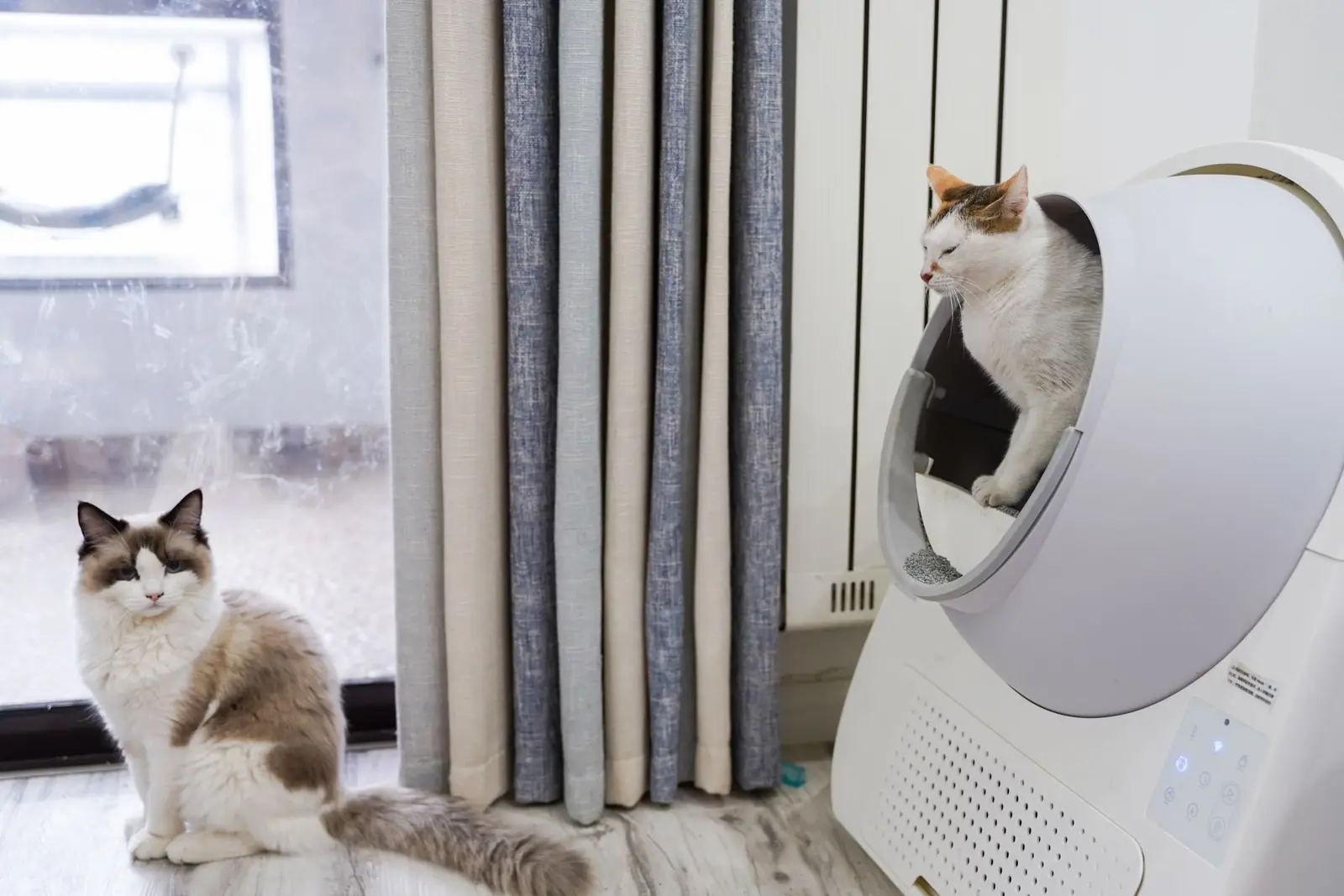
Whisker’s Litter-Robot 4 ramp lists $65 and is compatible only with Litter-Robot 4. The product page specifies non-slip rubber feet and two installation hinges. Its instructions distinguish installation with a standard fence from other fence arrangements, so verify the hardware before buying.
| Published example | Price | Fit or access limitation |
|---|---|---|
| Litter-Robot 4 ramp | $65 | Litter-Robot 4 only; check fence and hinge arrangement |
| Petmate gray small open tray | $6.99 | Outside height 3.5 inches; outside length 14.05 inches |
| Petmate gray large open tray | $10.99 | Outside height 5 inches; outside length 18.55 inches |
| Petmate gray jumbo open tray | $16.99 | Outside height 6.5 inches; outside length 22.05 inches |
Source note: manufacturer product pages and Petmate’s current size-variant catalog, checked October 2026. Tray dimensions are exterior dimensions; none proves that a cat with limited mobility can cross the rim.
- Petmate gray small open tray$6.99
- Petmate gray large open tray$10.99
- Petmate gray jumbo open tray$16.99
Source note: manufacturer product pages and Petmate's current size-variant catalog, checked October 2026. Tray dimensions are exterior dimensions; none proves that a cat with limited mobility can cross the rim.
The ramp adds 11 inches to the Litter-Robot’s depth, increasing its footprint from 22 × 27 to 22 × 38 inches. Those rectangles are 594 and 836 square inches, a 242-square-inch increase of about 41%. A narrow location may fit the robot but leave no room for the ramp or for a cat to turn around.
If the matching robot is already owned, $65 is an accessory comparison. If it is not, the project also needs the machine, and buying one solely to use a ramp is a different purchase. The automatic litter box budget covers that larger equipment decision. A model-specific ramp is not a universal tray-access device.
Bigger trays can introduce a higher entry barrier
The Petmate examples show a tradeoff: more length comes with greater exterior height. Its small tray is 14.05 inches long and 3.5 inches high; jumbo is 22.05 inches long and 6.5 inches high. A small low-sided tray is not automatically the better choice if the cat cannot turn comfortably inside it.
The house-soiling guideline calls for about 1.5 times the cat’s nose-to-tail-base length. For a hypothetical 14-inch cat, that is 21 inches. The small tray would be too short even before allowing for its tapered sides. The jumbo’s exterior length is closer, but the inside space and rim crossing still need checking.
A low entry cut into a larger container is one option discussed in the veterinary brochure, with attention to sharp edges. Do not assume any plastic container can be modified safely or that a rough cut is acceptable. A purpose-made low-entry product can avoid that work, but confirm its dimensions and stability before comparing prices.
For two cats, the one-per-cat-plus-one guideline gives three tray locations. Three $10.99 large trays would cost $32.97; three $16.99 jumbos would be $50.97. Those totals illustrate equipment spending, not a recommendation to select either size for all three locations. Social access and the older cat’s ability to enter each tray still determine the arrangement.
A small purchase budget can be staged by the barrier
Suppose an existing Litter-Robot 4 is usable but its entrance is difficult. A $65 ramp plus assumed $12 traction material for a nearby route and a $10 night light makes an $87 subtotal. Only the ramp price is published; the other amounts are hypothetical shopping allowances.
If instead the barrier is an upstairs tray, adding a $10.99 tray on the occupied level plus the same $10 night light gives a $20.99 subtotal before litter and checkout charges. The $66.01 difference from $87 is not evidence that one solution is better: the examples solve different problems. Identify the barrier before adding both purchases automatically.
For a floor-level rest area, assume a $35 washable bed, $12 non-slip mat and $10 light. That separate worksheet totals $57. Reusing the existing bed reduces cash spending to $22. These assumptions show how existing items can change a budget; they are not an advertised bed or accessory package.
An aid that blocks a hallway, rocks underfoot or becomes slippery when washed creates a new obstacle. Test stability, keep a clear approach and inspect wear. Do not require a reluctant cat to use the device just because it was expensive. A lower resting spot may remain the more usable arrangement.
Aids and veterinary costs remain separate
FelineVMA’s brochure gives checkup guidance of every six months for cats ages 10–15 and every four months over 15, with more frequent care possible for ongoing disease. Those schedules translate to two and three visits per year, but they do not establish a visit price or replace the cat’s own care plan.
For a hypothetical $80 examination fee, two visits total $160 and three total $240 before tests or treatment. Set that clinical spending beside the equipment budget rather than counting a ramp as preventing a future bill. No savings estimate here assumes that a product treats arthritis or eliminates veterinary assessment.
Contact the veterinarian when jumping, walking, appetite or litter habits change. Household aids can improve access, but they do not diagnose pain or justify giving human pain medicine to a cat.
Keep a short record of which changes the cat uses. A night light that makes the route visible and a tray on the right level can be evaluated by observation; a promised medical benefit cannot. Check that resources remain accessible when doors close or another animal occupies the route.
The adult-cat care budget separates food, litter, veterinary work and equipment. Put durable access aids on the purchase line, replacement mats or cleaning on their own lines, and clinical appointments in the care budget. Buying every aid at once can make it harder to identify which change improved the route.
Questions people ask
How much should a senior-cat access budget be?
It depends on the barrier. The examples include a $65 model-specific robot ramp and $6.99–$16.99 open trays. The $87 and $20.99 worksheets solve different access problems and include hypothetical extras.
Does the Litter-Robot 4 ramp fit any box?
No. The manufacturer specifies Litter-Robot 4 only and provides hinges for its installation arrangements. It adds 11 inches to the robot's depth, so floor space also matters.
Is the smallest tray best because its sides are low?
Not necessarily. The cat needs room to turn and dig as well as a manageable entry. Check usable interior length against the 1.5-times body-length guideline and assess the rim.
Can a ramp replace a visit for a cat that stops jumping?
No. A change in jumping or walking can indicate pain or illness. An aid changes the route through the home; veterinary assessment addresses why behavior changed.
Where these figures come from
- Senior Cats Have Special Needs FelineVMA · catfriendly.com
- Litter-Robot 4 Ramp: Price, Compatibility and Footprint Whisker · litter-robot.com
- Basic Litter Box: Size Variants and Dimensions Petmate · petmate.com
- House-Soiling: Accessible Litter Resources AAFP and ISFM · catfriendly.com
Figures last checked October 2026.