On this page
The first cold snap sends many new keepers to the farm store for a heat lamp. It feels like the kind thing to do. It is also one of the most common ways coops burn down.
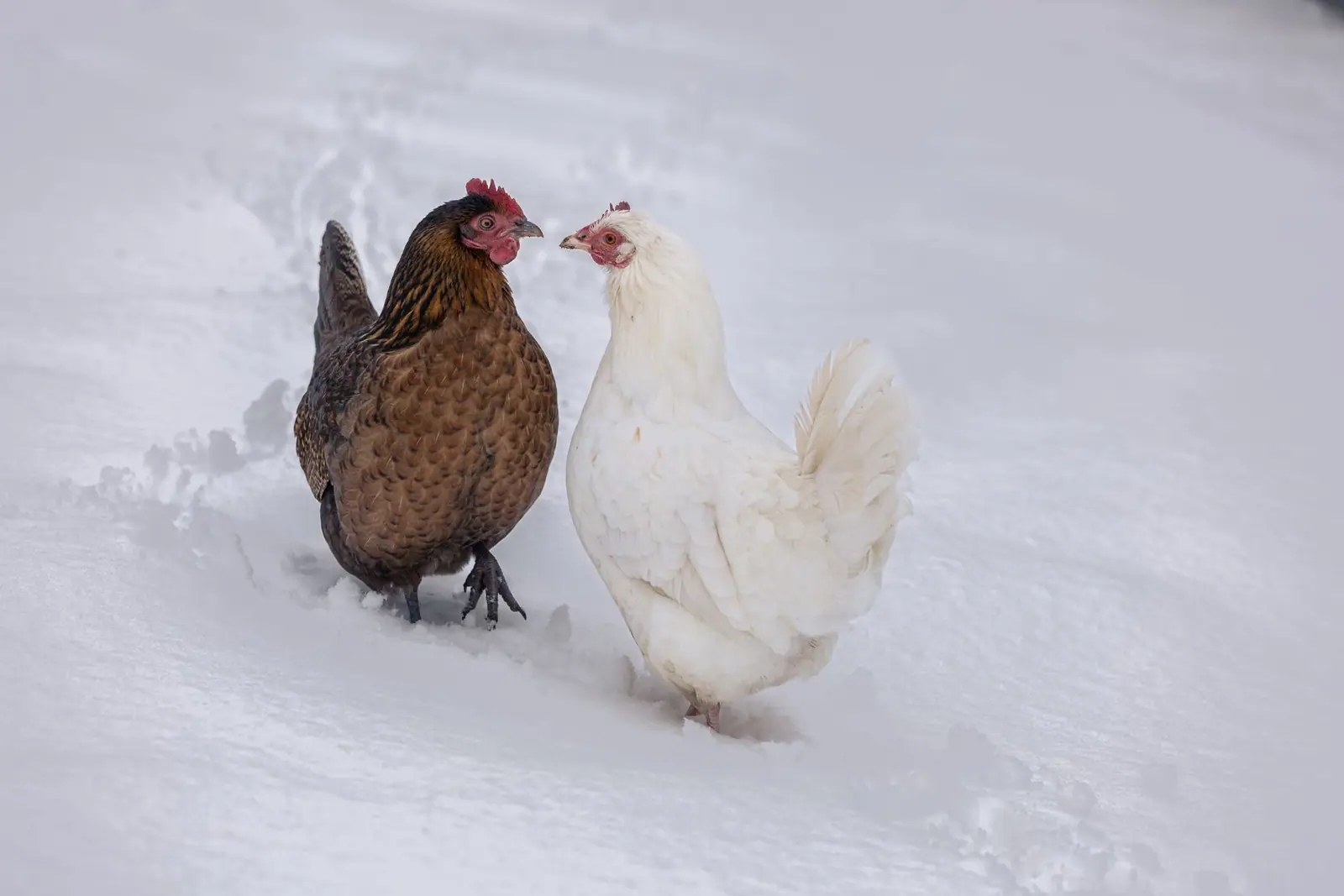
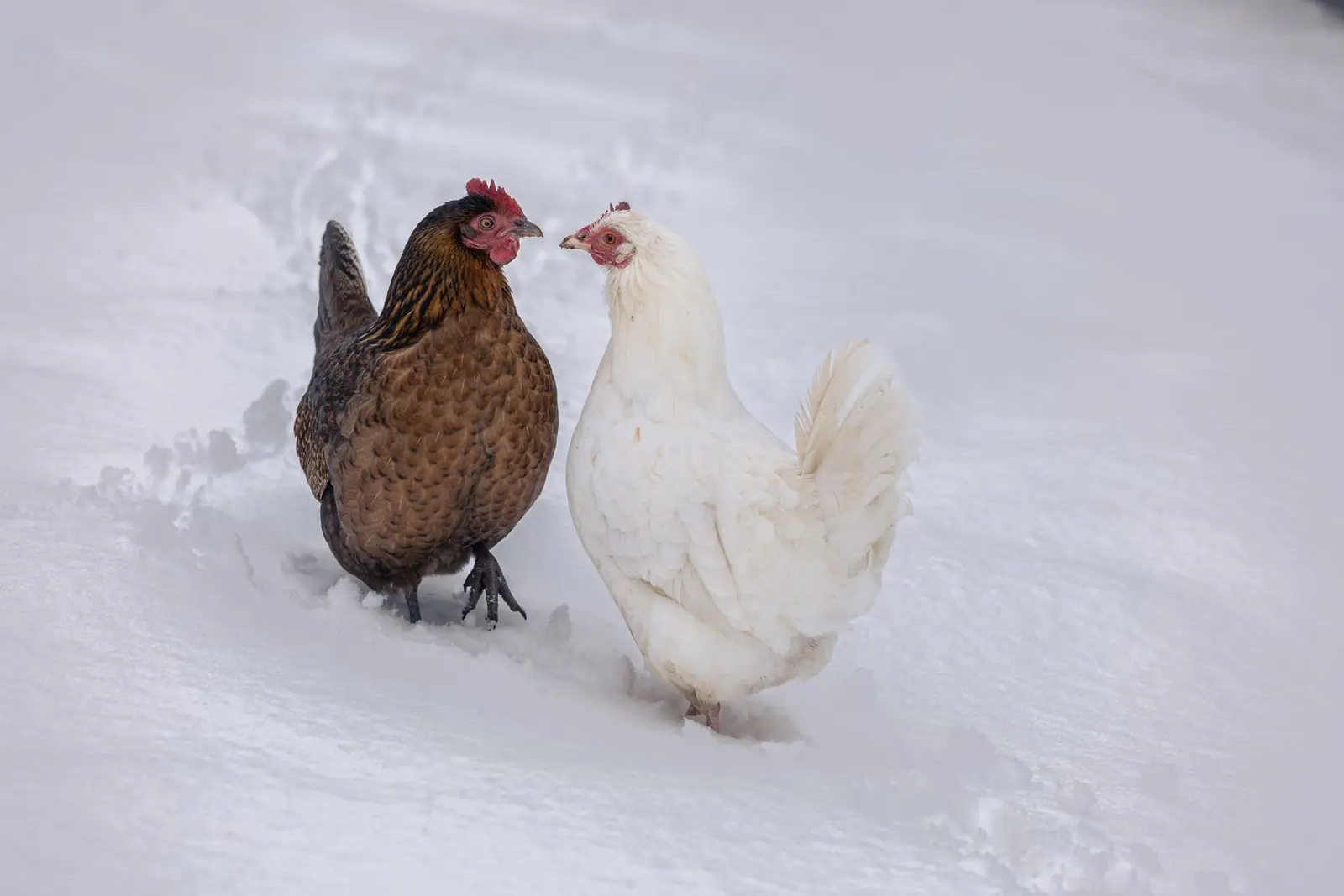
Chickens wear a down coat. What they need from you in winter is a dry, sheltered place to use it.
Why heat lamps are the wrong answer
University of New Hampshire Extension advises against adding supplemental heat to a coop in most circumstances because the fire risk is too high. Coops are full of dry bedding, dust and feathers, and chickens knock things over. A lamp that falls into shavings can start a fire quickly.
Heat also makes it harder for birds to adapt. Hens that live with gradual seasonal change grow the insulation they need.
Moisture is the real enemy
Chickens breathe out a lot of moisture, and their droppings add more. In a closed, unventilated coop that moisture condenses and settles in the bedding and on combs. The Extension Foundation’s poultry program notes that frostbite is most likely at night in a cold, poorly ventilated coop with damp bedding.
- Ventilate high, block drafts low. Vents near the roof let moist air out without blowing on roosting birds.
- Look for condensation. Water on windows or walls means you need more airflow.
- Keep bedding dry. Add fresh bedding on top and remove wet patches.
- Give wide roosts. Birds cover their feet with their bodies when they perch on a flat surface.
Water, eggs and light
- Water freezes first. Use a heated base rated for the purpose, installed safely, or swap waterers twice a day.
- Collect eggs often so they do not freeze and crack.
- Laying slows as days shorten. If you add light to keep hens laying, UNH Extension suggests LED bulbs, which produce little heat.
Use equipment made for livestock, secured so it cannot fall, and plugged into a properly rated outlet, not a chain of extension cords. Never use a clamp-on heat lamp over bedding.
The ventilation guide covers moisture and airflow in the housing. The heated waterer running-cost guide prices one winter equipment task.
Questions people ask
What temperature is too cold for chickens?
Healthy, acclimated hens handle cold well if they are dry and out of drafts. Damp coops and wet birds are the danger, not the number on the thermometer.
Do chickens need a heat lamp in winter?
Usually not. Extension specialists advise against heat lamps in most cases because of the fire risk.
How do I prevent frostbite on combs?
Improve ventilation to cut moisture, keep bedding dry, and avoid water sources that birds dip their combs into.
Should I close all the vents in winter?
No. Close drafts at bird level, but keep vents high on the walls open so moist air can escape.
Where these figures come from
- How Should I Take Care of Backyard Chickens in the Winter? University of New Hampshire Extension · extension.unh.edu
- Frostbite in Chickens Extension Foundation, Small and Backyard Poultry · poultry.extension.org
Figures last checked September 2026.