On this page
Feed is the biggest running cost of a flock and the easiest place to go wrong. Too many scraps and scratch grains, and hens lay fewer eggs with weaker shells. Too little calcium, and shells turn thin.
The good news is that the rules are simple.
Key figures
- 100 to 150 grams Daily feed per laying hen, Alabama Extension guidance
- 18 percent Layer-feed protein guidance from Alabama Extension
How much a hen eats
Alabama Cooperative Extension says a laying hen eats 100 to 150 grams of feed a day, roughly 0.25 pounds. That means:
| Flock size | Feed per day | A 50-pound bag lasts |
|---|---|---|
| 3 hens | about 0.75 lb | about 66 days |
| 6 hens | about 1.5 lb | about 33 days |
| 10 hens | about 2.5 lb | about 20 days |
- Three hensabout 0.75 lb
- Six hensabout 1.5 lb
- Ten hensabout 2.5 lb
Alabama Cooperative Extension daily feed benchmark, multiplied for the flock examples in this article. Approximate quantities; actual consumption and the flock's care requirements vary.
Hens eat more in cold weather to stay warm, and a little less in summer heat or when they forage in the yard.
Choose a complete layer feed
A commercial layer feed is formulated to meet a hen’s needs in every bite. Alabama Extension recommends a layer diet with around 18 percent crude protein to maintain good egg production, and higher calcium than chick or grower feeds.
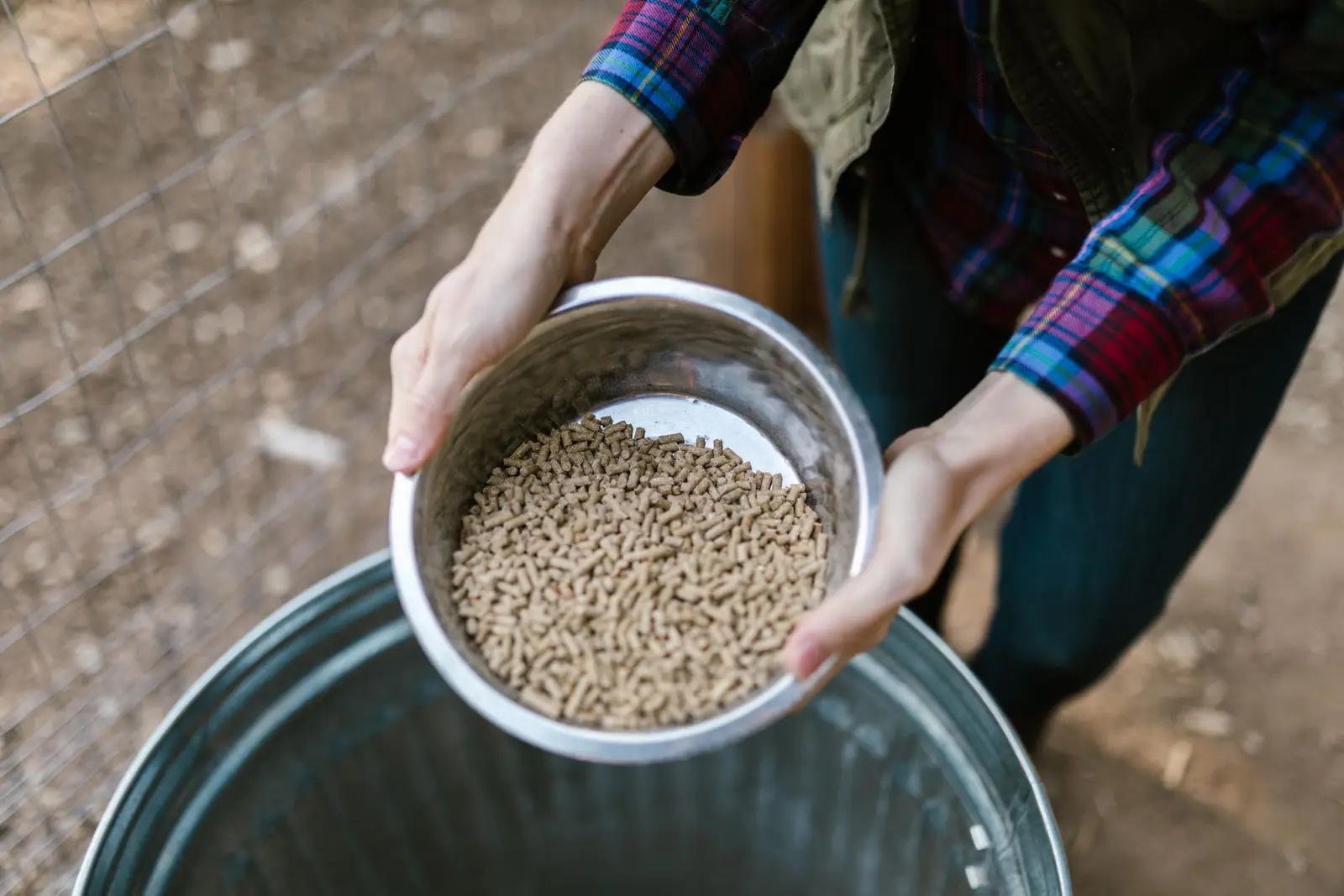
- Crumbles or pellets both work. Pellets waste less.
- Do not feed layer ration to chicks. The extra calcium is meant for hens in lay.
- Read the tag for protein and calcium, and check the date. Feed goes stale.
Calcium, grit and treats
An eggshell is about 96 percent calcium carbonate, according to Alabama Extension. Offer oyster shell in a separate dish so each hen takes what she needs. Dried, crushed eggshells work too.
If your hens eat anything besides pelleted feed, such as grass, weeds or whole grains, they also need grit to grind food in the gizzard.
Keep treats, scratch grains and kitchen scraps to a small share of the daily ration. They dilute the protein and minerals in the complete feed.
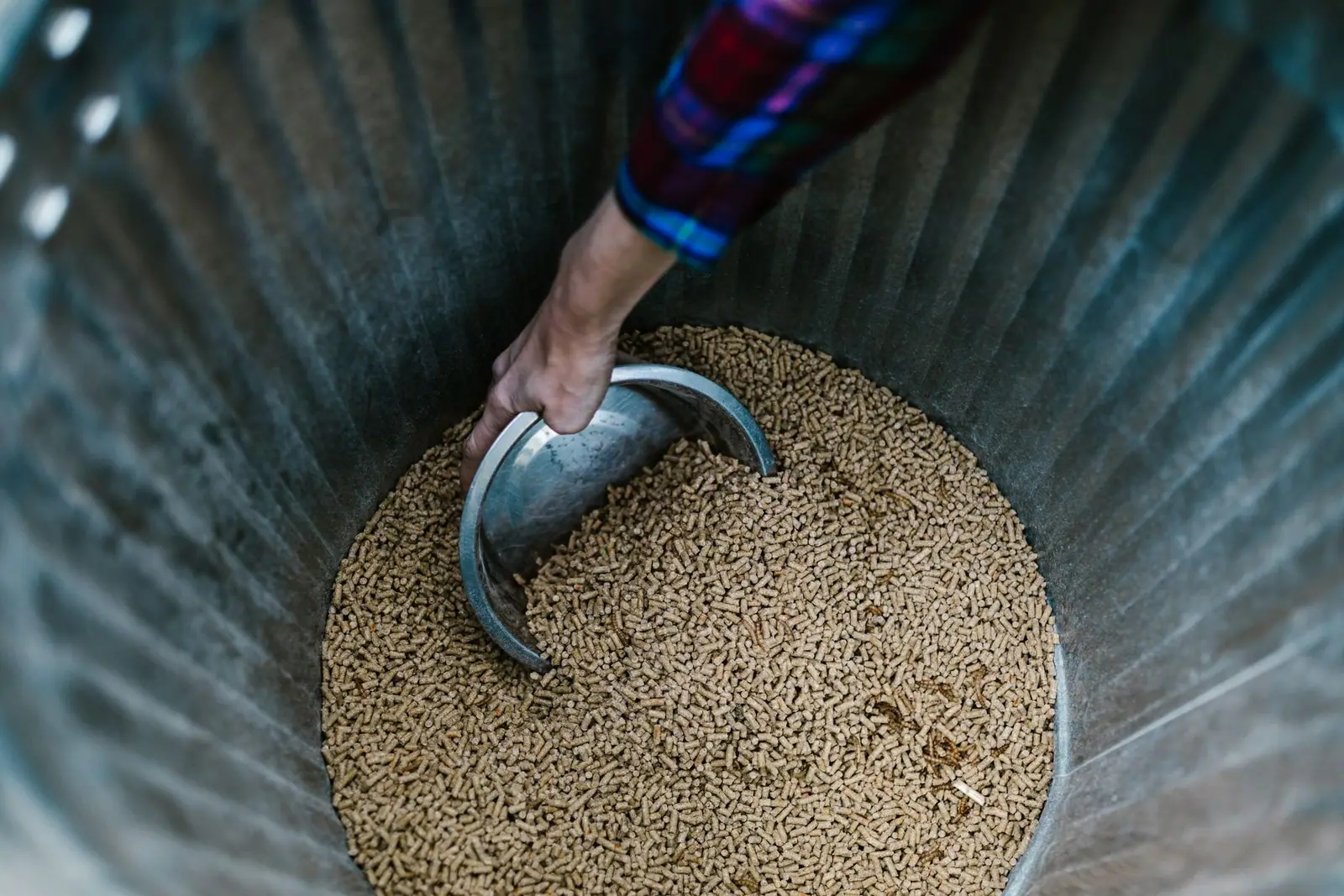
Keep feed in a metal can with a tight lid. Damp feed grows mold, and open bags draw rats and mice, which bring disease and eat eggs.
The feed-storage budget addresses the supplies before they are offered. The egg production guide puts feed questions beside other changes in the flock.
Questions people ask
How much does a chicken eat per day?
A laying hen eats roughly 100 to 150 grams, about a quarter pound, of feed a day. Large breeds and cold weather push that up.
Can chickens live on kitchen scraps?
No. Scraps lack the balanced protein and calcium hens need to lay well. Keep them as a small treat alongside a complete layer feed.
Do chickens need oyster shell?
Laying hens benefit from free-choice oyster shell for strong shells, even on layer feed. Offer it in a separate dish.
Should I leave feed out all the time?
Most backyard keepers keep feed available during the day. Store it securely at night to avoid attracting rodents.
Where these figures come from
- Backyard and Small Poultry Flock Management Series: Feeding the Laying Hen Alabama Cooperative Extension System · aces.edu
- Nutrition for Backyard Chicken Flocks Alabama Cooperative Extension System · aces.edu
Figures last checked September 2026.